
Moving Past the Static Plank: Building Real-World Core Strength

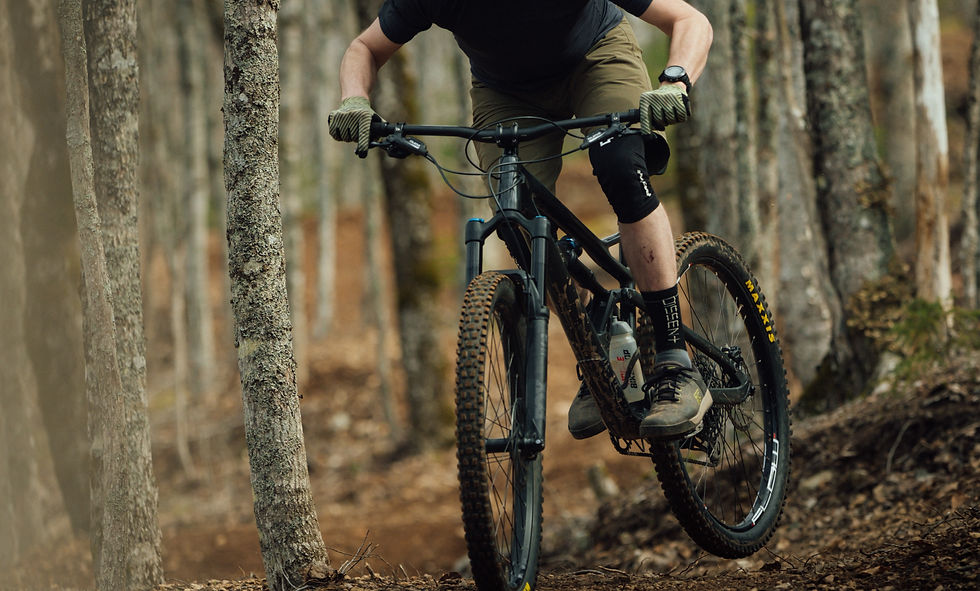
When you are navigating a rocky trail, lifting a heavy object, or recovering from a sudden slip, your body is never perfectly still. You don't get to lock yourself into a rigid, non-moving box and just hold it. True core strength is dynamic and reflexive—it needs to turn on, adjust, and adapt instantly while your arms and legs are moving fast.
The Problem with Static Bracing
While holding a standard, stationary plank builds baseline muscular endurance, it only teaches your body how to brace when everything else is completely frozen. It requires a conscious, deliberate effort.
But when you are out moving, your core has to work entirely on autopilot. If you take an uneven step on a loose stone or shift your weight under a heavy load, you don't have time to consciously think about squeezing your stomach. Your nervous system has to instantly recognize the sudden shift, fire the stabilizing muscles along your spine, and transfer that force smoothly between your upper and lower body.
If your core only knows how to turn on when your limbs are completely still, it won't know how to react when things get chaotic. That timing lag is exactly when power leaks happen, and that mechanical stress gets dumped directly into your lower back, leading to that familiar, nagging ache after a hard day on your feet.
What You Can Do at Home
To build a core that actually translates to real movement, you need to transition away from static holds and start moving your limbs while keeping your spine perfectly steady.
A great way to practice this at home is with a Dynamic Dead Bug.
Lie flat on your back with your arms pointing toward the ceiling and your knees bent at 90 degrees. Press your lower back flat into the floor so there is no space underneath you. Slowly lower your right arm behind your head while simultaneously extending your left leg straight out just above the floor.
The catch? Your lower back cannot budge or arch off the floor even a millimeter while your limbs move. Bring them back to the center and switch sides. By forcing your trunk to maintain a rock-solid spine while your shoulders and hips are actively moving, you teach your body how to stabilize dynamically rather than rigidly.
The Defiance Approach: Training Reflexive Stability
Let us help you bridge the gap between traditional fitness and clinical precision by looking at how your core functions under real-world conditions. We focus on how well your lower back is protected when your body is actually in motion.
Through targeted one-on-one personal training and precise movement coaching, we integrate reflexive stability directly into your lifting and running patterns. We use functional variations that force your trunk to adapt to changing forces on the fly. This builds a resilient, athletic core that operates entirely on autopilot, keeping your back completely protected so you can move with absolute confidence on any terrain.


Comments