
The Brake Mechanics Part II: Yielding Strength


Think about the last time you drove down a steep mountain pass. If your vehicle had a massive engine but completely worn-out brake pads, you would be terrified to push the gas pedal. You would ride the brakes, coast down slowly, and hope for the best.
Your body operates the exact same way.
When most of us think about getting stronger or faster, we focus entirely on acceleration. We want to explode out of a sprint, lift a heavier weight, or charge up a steep trail. But if you do not have the physical braking system to handle that power, your body will actively hold you back. That missing braking system is called yielding strength, the ability of your muscles to catch your body weight, absorb force, and control the lowering phase of any movement.
The Car Crash in Your Knees
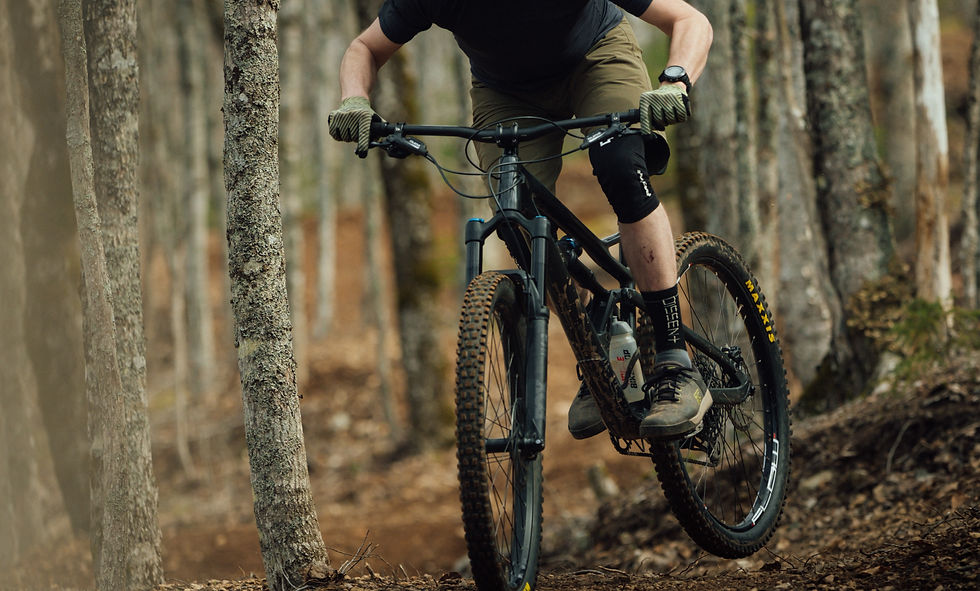
Every time you run downhill, land from a jump, or lower yourself into a squat, your muscles have to produce force while actively lengthening. Imagine a tug-of-war where your muscles are slowly giving ground under extreme tension rather than just letting go. This phase places a massive amount of stress on your body, far more than the actual pushing or lifting phase.
The problem is that most traditional workouts completely ignore this side of the equation. It is common to see people drop fast to the bottom of a squat, or let gravity just pull them down during a step-up, focusing all their energy on the effort it takes to push back up.
When you skip the lowering phase, you miss out on building structural durability. Your muscles become great at producing power, but terrible at absorbing it. Without that built-in shock absorption, every heavy landing or downhill stride sends a jarring shock wave directly into your tendons and joints, leading to nagging knee pain and stubborn hip tightness.
What You Can Do at Home
Upgrading your braking system does not require complicated equipment. You can start practicing this at home by changing how you handle gravity during your everyday movements or home workouts.
The simplest adjustment is to slow down. The next time you do a squat, a lunging step, or a step-down off a step, take three to four full seconds to lower your body weight. Do not just drop to the bottom. Actively fight gravity the entire way down, pause for a second at the lowest point, and then push back up. This simple shift forces your body to build the exact control needed to protect your joints on uneven terrain.
How We Help You Build It
At Defiance PT and Wellness, we focus on how your body manages energy before the impact ever hits your joints. Traditional fitness and rehab often treat movement like a basic checklist of exercises, but we bridge the gap between physical therapy and high-performance training to fix the root cause of your power leaks.
We analyze your movement to see exactly where your braking system is failing. Instead of giving you generic stretches, we look at how your body catches itself on a single leg and where you might be overloading your structure.
Through one-on-one personal training and targeted movement coaching, we guide you through proper loading mechanics and progression. We teach your body how to handle impact safely, eliminating the structural wear and tear that keeps you sidelined. Whether you want to bulletproof your knees for trail season or break through a lifting plateau, we give you the tools and coaching to attack the descent just as hard as the climb.


Comments