
Understanding Rep Ranges with Nick DeLuca: Optimizing Strength, Muscle Growth and Endurance

Something that often confuses people in the gym is rep schemes. As a trainer, I’m asked all the time “how many reps should I do?” Honestly, I don't think there is a wrong answer. If you are showing up to the gym any rep range will benefit you, but the correct rep range when training for something specific can make all the difference. Different rep ranges and weight schemes create different changes within the body, allowing you to target specific outcomes. Let's break down the most common and studied rep ranges and explain what each one is best suited for.
Power & Strength

The first rep range I want to go over is 1-3 reps, optimal for maximizing strength and power. When lifting in this range, you’re typically lifting 85%-100% of your 1 RM. Due to the heavy load, 3-5+ mins of rest depending on intensity and movement is standard. When lifting at this percentage of your 1 RM, good form is a must. This is built up by repetitions at much easier weights, and may require feedback to master. This is best suited for powerlifters, olympic weightlifters, and strength sport athletes and is likely where a significant amount of time of their training will be spent. This rep range and resistance together not only improves muscular force production, but training at heavy weight can build confidence under heavy loads. I spent about 2 years training powerlifting and can say that confidence (or lack of) can be a total game changer! I usually recommend only performing compound movements (bench press, squat, deadlift) at this rep scheme.
Strength & Muscle Growth

Next is the 3-8 rep range which is best for both building strength and increasing muscle growth. The load for 3-8 reps should still be relatively heavy and the goal is to create enough volume for muscle growth through progressive overload. This rep range is best suited for strength focused individuals, athletes and general fitness enthusiasts as it’s ideal for strength development and muscle building. The more muscle you can grow the more muscle tissue you’ll have. The importance of muscle tissue and its effects on joint and metabolic health are huge in terms of long term health and quality of life. I will usually incorporate this rep range when focusing on larger muscles or muscle groups.
Muscle Growth
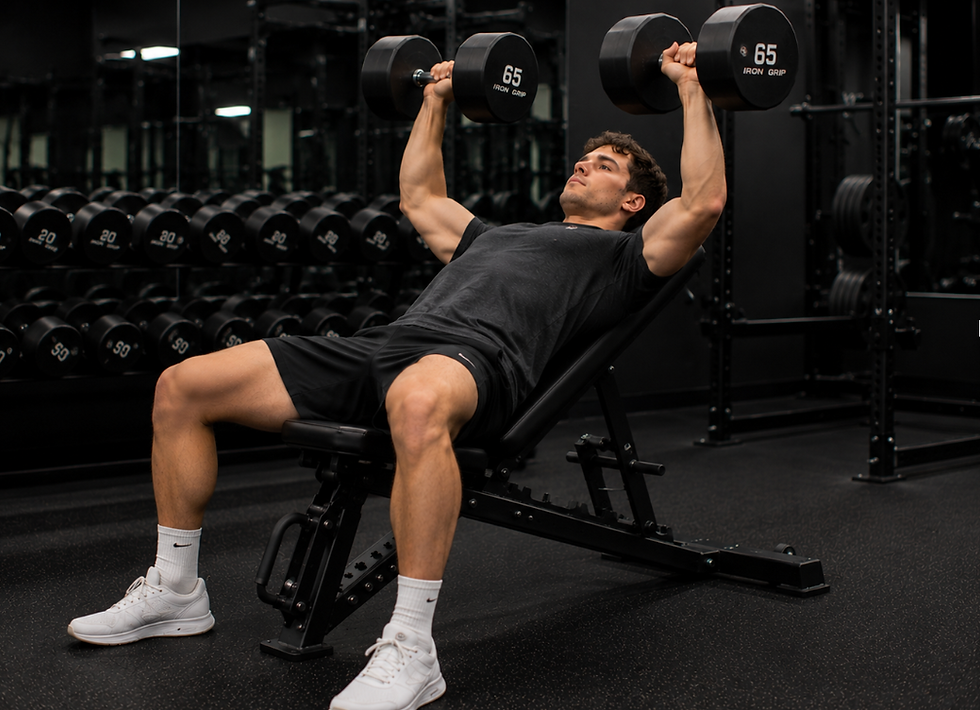
The next rep range is 8-15 reps and in this range, the focus is muscle hypertrophy. While muscle hypertrophy does occur at other ranges, this is where it's most optimal. This range provides enough volume, tension and stress to the muscle to maximize muscle growth. The weights in this range are moderate, allowing you to do more total work while also challenging muscle control and coordination. While this range is great for bodybuilders and other physic athletes, it's also a great tool for someone newer to the gym or with pretty general fitness goals. This is because of how effective muscle hypertrophy is at creating muscle, which as I said earlier is the foundation for long-term health and quality of life. Sets in this range should be challenging and close to failure to maximize potential muscle building. I will program almost anything within this range, as it is great for lighter compound movements or variations as well as accessories.
Muscular Endurance

The last rep range I want to go over is 15-25 reps, which is best for muscular endurance and conditioning. Higher reps and less resistance help train muscles to sustain work loads over a longer period of time.This range is commonly used for conditioning circuits, rehab exercises or accessory work. Something to consider is exercise selection and being able to maintain technique as fatigue increases. Starting without resistance may be needed to ensure proper form before over time increasing load.
So when someone asks the question “How many reps should I do,” there can be a different answer for anyone. If it's a client of mine and I know their goals, it’s pretty easy to answer. If someone I've never worked with were to ask, I usually recommend the 8-15 rep range as this is applicable to most goals and exercises. I’ve seen many clients, regardless of their age, have success in this range. However, hopefully after reading this you can see the value of all rep ranges. Having a well rounded program that incorporates all ranges is best for not only optimal performance but overall health. Next time you’re in the gym and are unsure what to do, think about what you're trying to achieve, that will lead you in the right direction. If you’re looking for some more help with sets and reps, feel free to reach out!



Comments